The industrial world is currently navigating a transition that is as significant as the move from steam to electricity. While “Smart Manufacturing” has been a buzzword for nearly a decade, the reality on the factory floor often lagged behind the marketing hype. Traditional automation was rigid, relying on fixed logic and “if-then” statements that broke the moment a variable changed. However, in 2026, we are seeing the rise of the true Smart Factory—an ecosystem where machines do not just follow instructions but actively collaborate. This shift is powered by the move from isolated smart tools to integrated, autonomous agents that manage the “atoms, bits, and neurons” of production. By building specialized agents for industrial automation, manufacturers are transforming their facilities into self-optimizing profit centers.
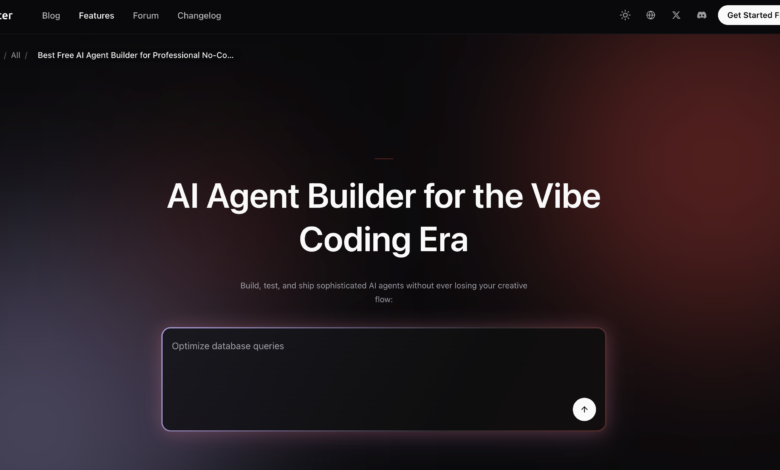
At the core of this evolution is the ability to bridge the gap between high-level business goals and low-level machine execution. By utilizing a sophisticated AI agent builder, industrial leaders can create digital “co-workers” that monitor the entire production sequence. These agents are not just monitoring temperature or vibration; they are reasoning about complex objectives such as “optimize output despite a 20% delay in raw material arrival.” This shift allows human talent to focus on empathy-driven resolutions and strategic orchestration rather than manual monitoring and troubleshooting.
The Rise of the Digital Co-Worker
In the 2026 factory, the relationship between human and machine has been redefined. We no longer just “use” machines; we manage a digital workforce. These agents act as the connective tissue between disparate software environments, from the ERP (Enterprise Resource Planning) to the MES (Manufacturing Execution System). An agentic system can autonomously detect a network anomaly, open a service ticket in the CMMS, and alert the logistics team to a potential shipping delay—all in a single, integrated sequence without human intervention.
This level of autonomy turns every factory employee into a strategic supervisor. Instead of performing repetitive data entry or monitoring a screen for alarms, workers are delegating tasks to agents and verifying the quality of the outcomes. This “human-in-the-loop” model ensures that while the agents handle the high-speed processing and logic, the humans retain control over the nuanced, high-stakes decisions that define the business’s success.
Contextualizing Raw Data with Custom Logic
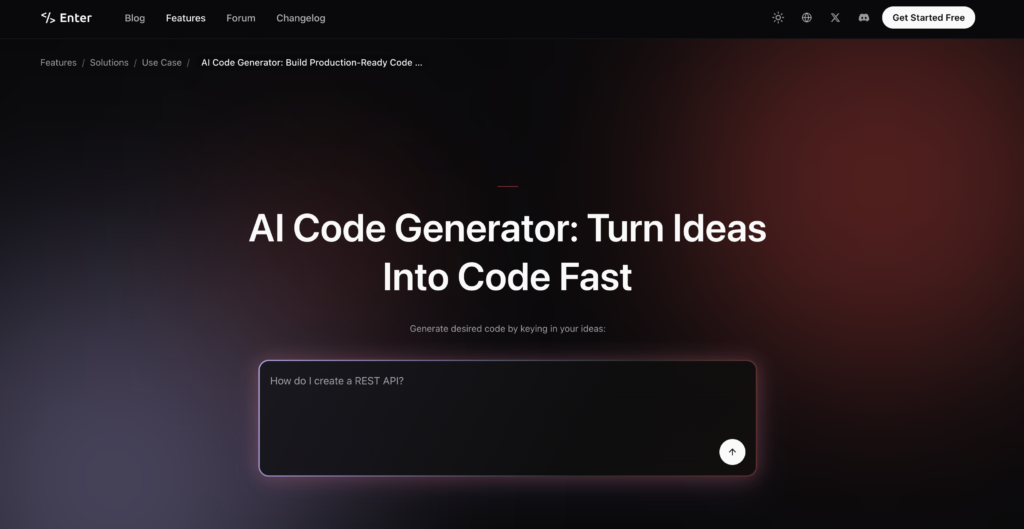
One of the historical blockers to industrial AI was the “messy data” problem. A factory produces terabytes of raw sensor data, but it is useless without context. To build an effective agent, you must first teach it how to interpret the factory floor. This is where AI code generation becomes a vital tool. Engineers are now using AI to generate the “DataOps” code needed to map raw tags into a standardized digital-twin format that an agent can understand.
For example, an agent needs to know that a specific temperature spike isn’t just a number—it’s a bearing in a specific motor that has reached its critical threshold. By generating the custom logic and API hooks to connect sensor arrays to analytical models, manufacturers can “plug and play” new agents into their existing infrastructure. This deskills the integration process, allowing plant managers to deploy new automation workflows in days rather than months of custom development.
Enter Pro as the Industrial Command Center
The complexity of managing a multi-agent system across several factory sites requires a unified platform built for governance and trust. Enter Pro acts as the foundational layer for the modern smart factory. It provides the secure, centralized infrastructure where these industrial agents live and work. Without a platform like Enter Pro, a factory risks creating a “spaghetti mess” of disconnected scripts that are impossible to audit or secure.
In an Enter Pro environment, security is hardware-enforced. The platform supports advanced protocols like Data Diodes, which ensure that data can flow out of the factory for analysis while making it physically impossible for unauthorized commands to flow back into the control network. This level of security is essential in an era where the “air gap” is dead and every device on the floor has a digital identity. Enter Pro ensures that the transition to autonomy doesn’t come at the cost of safety or compliance.
From Maintenance to “Self-Healing” Operations
The most immediate ROI for industrial agents is found in predictive and prescriptive maintenance. Traditionally, a machine failed, and then it was fixed. Even “predictive” systems often just gave a warning that a human then had to investigate. A 2026 industrial agent goes further. It senses the vibration anomaly, retrieves the asset history and maintenance manuals via RAG (Retrieval-Augmented Generation), assesses the cost impact of an immediate shutdown versus a delayed one, and automatically reserves the necessary spare parts in the ERP.
This “self-healing” capability reduces unplanned downtime by up to 40%. It ensures that the factory is always operating at peak OEE (Overall Equipment Effectiveness) by aligning maintenance schedules with real-time production priorities. The agent doesn’t just tell you there is a problem; it presents you with a completed plan to solve it, including the work order and the technician schedule already finalized.
Sustainability as a Profit Center
Beyond pure production volume, agents are now being used to turn the factory’s energy footprint into a competitive advantage. By building energy-aware agents, companies can create “Virtual Power Plants” within their facilities. These agents monitor real-time energy tariffs and shift non-critical loads—like heavy cooling or compressed air systems—to times when electricity is cheapest or when on-site solar and battery storage are at their peak.
This level of granular control allows a manufacturer to act like a utility company, selling excess power back to the grid or drastically reducing their carbon footprint. Sustainability is no longer a compliance burden; it is an optimized operational strategy handled by agents that reason through the physics and economics of energy in real-time. It’s a win for the planet and a significant win for the bottom line.
Concluding
In conclusion, the shift from smart tools to smart factories is a journey toward total operational orchestration. By leveraging the power of an agent builder to create specialized digital co-workers and using code generation to bridge the gap between IT and OT (Operational Technology), manufacturers are unlocking a new era of productivity. Enter Pro provides the governance and security needed to scale these innovations across global sites, ensuring that the future of industry is both autonomous and accountable. In 2026, the leading manufacturers are no longer those with the most machines, but those with the smartest agents managing them. The digital assembly line is here, and it is transforming the world of atoms into a world of intelligent, responsive neurons.