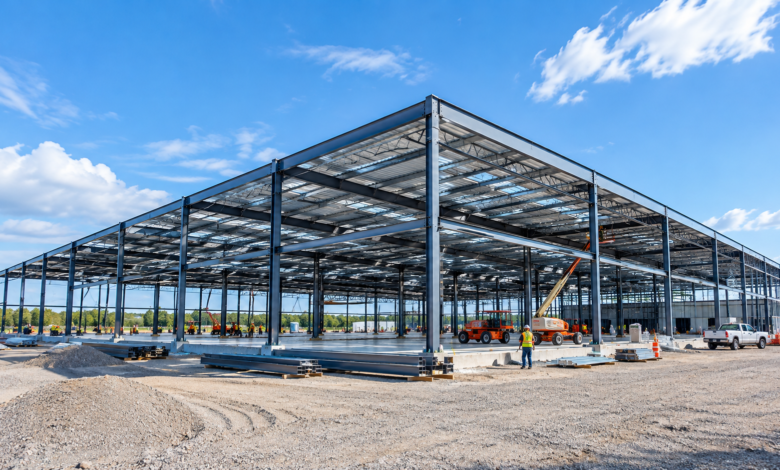
Commercial real estate has changed dramatically over the last few years. Ask any general contractor or developer working on a large-scale project today, and they will tell you the same thing: inflation, labor shortages, and material delays are pushing traditional building methods to their limits. Building with brick, mortar, or structural timber just isn’t delivering the return on investment it used to. Because of these rising pressures, commercial steel buildings have transitioned from an alternative construction choice to the primary standard across the industry.
Whether an organization is looking to construct a regional distribution hub, a retail strip, or an industrial workshop, pre-engineered steel structures offer a level of practical utility that traditional materials simply cannot compete with.
Rapid Job-Site Assembly and Reduced Financial Overhead
Every single day a construction site remains active represents money leaving your bank account. Extended site hours mean paying ongoing equipment rentals, site security, manager salaries, and interest on construction loans. Traditional builds require constant field adjustments, curing periods for concrete, and manual cutting of wood, all of which drag out the construction schedule.
Steel framing operates under a completely different logic. The components are manufactured off-site in controlled facilities according to exact CAD specifications. By the time the materials arrive at your location, the work shifts from raw construction to systematic assembly.
- Fewer Field Delays: Because components arrive pre-cut and pre-drilled, assembly crews can put together the primary framing in a fraction of the standard time.
- Lower Labor Expenses: Faster build times directly translate to fewer billable labor hours on the job site.
- Earlier Operation: Getting the roof over your space faster means your business can open its doors and start generating revenue months ahead of schedule.
Long-Term Structural Resilience with Minimum Maintenance Needs
A commercial property is a long-term asset, meaning it needs to hold its value without draining your operating budget on constant repairs. Wood structures degrade over time due to moisture, shifting temperatures, and organic pests. Concrete, while durable, can crack under temperature fluctuations or foundation settling.
Steel provides a structural foundation that stays solid for decades with surprisingly little intervention.
- Fire and Pest Immunity: Steel does not burn, nor does it attract termites, carpenter ants, or fungal rot. This built-in safety factor frequently helps property managers secure better rates on commercial building insurance.
- Weather Endurance: Heavy snow loads, high coastal winds, and seismic shocks pose far less threat to engineered steel frames than to traditional structures.
- Protective Finishes: Modern factory-applied coatings protect exterior steel panels from rust and solar degradation, keeping maintenance budgets predictable and low over the long haul.
Maximum Floor Plan Flexibility and Clear-Span Engineering
Walk inside a traditional warehouse or large retail store built decades ago, and you will likely notice a grid of interior support columns every twenty or thirty feet. These pillars limit how you can position heavy machinery, store inventory, or layout retail aisles.
One of the biggest functional advantages of structural steel is its capacity for clear-span engineering. Steel trusses can support massive roof spans without needing any internal load-bearing posts. This gives you complete freedom over your interior floor plan. If your operational needs change five years from now, you can reconfigure your interior walls without worrying about structural integrity. Furthermore, if you need to physically expand your facility later, adding extra bays to a steel frame is straightforward and cost-effective.
Energy Efficiency and Sustainable Construction Standards
Modern corporate standards demand energy-efficient operations, not just to look good, but to keep monthly utility bills manageable. Older steel structures had a reputation for heat loss, but modern engineering has completely turned that around.
Deep steel wall cavities leave plenty of room for thick insulation systems. When you pair high-R-value insulation with modern insulated metal panels (IMPs) and cool-roof reflective finishes, a steel building maintains stable interior temperatures easily. This drastically cuts down the workload on your HVAC units during hot summers and cold winters. Additionally, steel is 100% recyclable, making it an environmentally responsible choice that aligns well with modern green building standards.
Finding the Right Structural Partner
Having the best materials won’t mean much if your supplier misses deadlines or delivers poorly engineered components. Successful commercial projects rely heavily on working with proven industry specialists. By choosing high-quality commercial steel buildings engineered by established suppliers like Western Steel, developers gain the technical expertise, precision, and logistics coordination needed to keep complex projects moving smoothly from blueprints to finished structures.
Final Thoughts for Developers and Project Owners
Investing in new commercial property requires balancing immediate construction budgets against lifetime operational costs. By cutting down project timelines, offering total design flexibility, and keeping long-term maintenance to a minimum, commercial steel buildings represent one of the safest financial bets in modern construction. If your goal is to build a facility that performs reliably while protecting your bottom line, steel is the clear way forward.