The New Digital Souvenir: Why People Are Animating Old Photos Instead of Just Posting Them

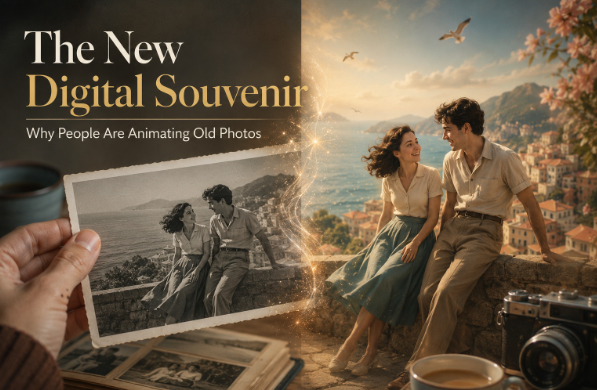
I used to think of old photos as things we saved, not things we reused. A holiday picture went into a folder. A birthday photo stayed on Instagram for a week, then disappeared under newer posts. Family photos lived in cloud albums that nobody opened unless someone needed a throwback image.
That has changed a lot in the last year or two. When I test creative tools now, I notice people are not only editing photos to make them cleaner. They are turning them into small moving memories. A still portrait can become a short animated clip. A casual selfie can become a playful scene. Even simple tools like face swap on GoEnhance AI show how people are experimenting with identity, character, and personal images in a way that feels closer to storytelling than normal photo editing.
This is why I like the phrase “digital souvenir.” It sounds more accurate than “AI content.” Most people are not trying to produce a professional campaign. They just want one photo to feel more alive.
Why Static Photos Feel Less Complete Now
A photo still matters. I do not think video has replaced photography. But the way people share memories has changed.
On TikTok, Instagram Reels, YouTube Shorts, and even messaging apps, motion makes content feel more immediate. A static photo may be beautiful, but a moving image usually holds attention longer. It gives the viewer a tiny beginning, middle, and end, even if the clip is only a few seconds long.
That small difference matters. When I look at old travel photos, I often remember the movement around the picture more than the frame itself. The wind, the crowd, the awkward pose, the feeling of walking through a street at night — none of that appears in the photo. Animation tools help users suggest that missing movement without needing to record video at the time.
This is especially useful for older photos. Many people have family pictures from years ago, but no video. They have graduation photos, wedding photos, childhood pictures, pet portraits, and travel shots. A moving version of one of those images can feel surprisingly emotional, even when the effect is simple.
The Shift From Editing to Re-Experiencing
Traditional photo editing usually asks: how can I make this image look better?
AI photo animation asks a slightly different question: how can I make this image feel like a moment again?
That is a more emotional use case. I have seen people use animated photos for birthday messages, memory videos, family posts, anniversary clips, and short social stories. The goal is not always realism. Sometimes the goal is just to make the image more shareable and more personal.
Here is how I usually think about the difference:
| Old Photo Habit | New AI Photo Habit |
| Upload a still image | Turn one photo into a short clip |
| Add a filter | Add subtle motion or expression |
| Post once and move on | Reuse the photo for a memory video |
| Focus on image quality | Focus on emotional response |
| Store in an album | Share as a small story |
This shift explains why AI photo tools are not only popular with designers. They are also popular with ordinary users who may never open professional editing software.
Why Personal Photos Work Better Than Generic Visuals
There is a simple reason personal images work well with animation: the viewer already cares about the subject.
A random AI-generated character may look impressive, but a real friend, pet, partner, parent, or personal memory carries its own context. The image does not need to be perfect. It already has meaning.
That is also why I think casual creators often prefer simple workflows. They do not want to learn complex video editing. They want to upload a picture, describe what they want, preview the result, and decide whether it feels right. The emotional test comes before the technical test.
I have noticed this especially with old photos. People are much more forgiving of small imperfections if the result brings back a memory. A slightly animated smile, a soft camera movement, or a gentle expression change can be enough.
Where Photo Animation Fits Into Everyday Sharing
The strongest use cases are usually small and practical. They are not huge productions.
People use animated photos for:
- birthday and anniversary posts
- short memory reels
- profile videos
- pet tribute clips
- couple edits
- family throwback content
- travel recap videos
- casual social media experiments
The interesting part is that one image can now have several lives. A photo can be used as a normal post, then later turned into a short clip, then included in a memory montage.
When I want to test this kind of workflow, I usually start with one strong image and one simple idea. For example, “make this portrait feel like a warm memory” usually works better than asking for too many movements at once. The more personal the image is, the less it needs heavy effects.
For users who simply want to make photo animation online free, this lighter approach is often enough. A short, clean motion clip can feel more natural than a dramatic effect that overwhelms the original photo.
The Safety Side Still Matters
Because these tools work with personal images, I also think users need to be careful. A funny edit may feel harmless, but photos involve identity, consent, and context.
My own rule is simple: I only use images I own, images I have permission to edit, or images where the person clearly understands how the result will be used. That is especially important if the image shows someone’s face.
The same applies to publishing. A private birthday video is different from a public post. A playful face edit among friends is different from editing someone’s image in a misleading way. AI tools make creative work easier, but they do not remove responsibility.
Why This Trend Feels More Human Than It Sounds
The phrase “AI-generated content” can sound cold. But many of the best uses I have seen are actually warm and personal.
Someone animates a childhood photo. Someone makes an old travel picture feel alive again. Someone turns a pet photo into a short memory clip. These are not just technical experiments. They are new ways of revisiting old moments.
That is why I think the digital souvenir idea will keep growing. People already have thousands of photos sitting unused. They do not need more storage. They need better ways to reconnect with the images they already have.
A still photo captures what something looked like. A moving version can sometimes bring back what it felt like. That difference is small, but it is powerful.