Remote Work Security Risks: How Modern Cybersecurity Solutions Keep Your Team Safe

Remote work gives Malaysian businesses more flexibility. Teams can work from home, coworking spaces, client sites, and different locations without slowing down daily operations. That freedom is useful, but it also creates new security risks.
Employees now access company systems through different devices, networks, browsers, and cloud tools. A weak password, unsafe WiFi connection, outdated laptop, or fake login page can expose sensitive business data.
This is why modern cybersecurity solutions matter. They help protect remote teams, secure business systems, reduce digital risks, and keep customer trust intact. For companies using hybrid or remote work, cybersecurity is no longer optional. It is part of running a safe digital business.
Why Remote Work Creates New Cybersecurity Risks
Remote work changes the way businesses protect their systems. In a traditional office, employees usually connect through a controlled network. The company can manage devices, monitor traffic, and apply security rules more easily. Once people work from different locations, that control becomes harder.
A remote employee may use a home router that has not been updated for years. Another may connect through public WiFi at a cafe. Some may use personal laptops, shared devices, or browser extensions that the company does not manage. These small gaps can create openings for attackers.
Remote work also increases the number of access points. Staff may log in to email, cloud storage, project tools, customer systems, payment platforms, and internal dashboards from many places. Each login is a potential target if the account is not protected properly.
For Malaysian businesses, this matters because digital operations now depend heavily on cloud platforms, online collaboration tools, mobile access, and customer data. Finance, ecommerce, logistics, public services, professional firms, and technology companies all face higher exposure when teams work outside one secure environment.
Modern cybersecurity solutions help reduce these risks by protecting users, devices, networks, cloud systems, and business data together.
Common Remote Work Security Risks Businesses Face
Remote work creates several security risks that can affect businesses of any size. Some are technical. Others come from daily habits. Both matter.
One common risk is weak passwords. Employees may reuse the same password across work and personal accounts. Some may share credentials with team members for convenience. If one password is exposed, attackers may try it across email, cloud tools, admin dashboards, and business systems.
Phishing is another serious threat. Remote employees often rely on email, messaging apps, shared links, and digital documents. Attackers use fake invoices, delivery notices, login pages, job files, payment requests, and urgent messages to trick people into clicking. These attacks look more convincing than before.
Unsecured WiFi also creates risk. Home routers may have weak settings. Public WiFi can expose users to unsafe networks. A remote worker using an outdated laptop or personal device may also lack proper antivirus, encryption, or system updates.
Cloud misconfiguration is another issue. Remote teams often store files in cloud platforms. If permissions are too open, sensitive documents may be exposed to the wrong people. Shared folders, public links, and poor access control can quietly create data leaks.
Shadow IT adds another layer of risk. Employees may use unapproved apps to send files, manage tasks, or speed up work. These tools may not follow company security standards.
A strong cybersecurity service helps businesses identify these risks early and build safer remote work practices.
How Cybersecurity Solutions Keep Remote Teams Safe
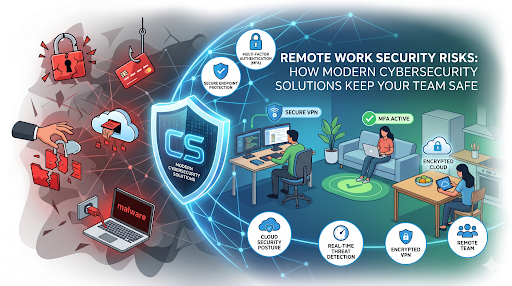
Modern cybersecurity solutions protect remote teams by securing the main areas attackers usually target. This includes user accounts, devices, networks, cloud systems, and business data.
Identity and access management is one of the first layers. It helps companies control who can enter each system. Strong passwords, multi factor authentication, role based access, and regular access reviews make it harder for attackers to take over accounts. Employees should only access the tools and data they need for their role.
Endpoint security protects the devices used for work. Remote laptops, phones, and tablets need antivirus protection, system updates, encryption, and monitoring. If a device is lost or compromised, the business should have a way to lock it, wipe it, or remove access quickly.
Threat detection and response add another layer of safety. These tools monitor unusual behavior, suspicious logins, malware activity, and possible attacks. Fast detection helps teams respond before a small issue becomes a serious breach.
Secure cloud and network protection also matter. Many remote teams depend on cloud storage, SaaS platforms, and online dashboards. Firewalls, secure access controls, VPNs, cloud monitoring, and permission management help reduce exposure.
A reliable cybersecurity service provider brings these layers together. Instead of treating remote security as separate tools, the business gets a structured system that protects people, devices, data, and daily operations.
Why Cybersecurity Must Protect People, Devices, and Data
Remote work security is not only a technical issue. It also depends on people and daily behavior. A company can have strong tools, but one careless click on a fake login page can still create serious risk.
Employees need clear security habits. They should know how to spot phishing emails, avoid suspicious links, protect passwords, update devices, and report strange activity quickly. Security awareness helps reduce human error, which is still one of the most common ways attackers get in.
Devices also need proper protection. A remote laptop may connect to many networks in one week. It may store downloaded files, browser sessions, work documents, and customer information. Without updates, encryption, and endpoint security, that device can become a weak point.
Data protection is just as important. Remote teams often handle customer records, payment details, contracts, credentials, business reports, and internal files. If this data is exposed, the damage can affect operations, customer trust, and brand reputation.
Modern cybersecurity solutions protect these three areas together. People need guidance. Devices need control. Data needs secure access, monitoring, encryption, and backup.
For Malaysian businesses, this balanced approach is important because remote work touches many industries. Ecommerce, finance, logistics, healthcare, public services, and technology companies all rely on digital trust. A strong cybersecurity service helps keep that trust intact while teams work from anywhere.
The Role of a Cybersecurity Service Provider
A cybersecurity service provider helps businesses manage security in a structured and ongoing way. This is important because remote work risks do not stop after one setup. Threats change, employees change devices, new apps are added, and cloud permissions can become messy over time.
A reliable provider helps assess where the business is exposed. This may include account security, device protection, cloud access, network controls, data storage, and employee habits. From there, the provider can recommend practical steps that match the company’s size, industry, and risk level.
The role also includes monitoring and response. If suspicious activity appears, the business needs fast action. Delayed response can turn a small incident into downtime, data loss, or a customer trust issue. A cybersecurity partner helps detect threats earlier and supports the team during incidents.
Many Malaysian SMEs and growing companies do not have a large internal cybersecurity team. A provider helps close that gap. It gives the business access to security knowledge, tools, planning, and ongoing support without forcing the company to build everything alone.
A good cybersecurity service also supports long term improvement. It helps teams review policies, strengthen access control, improve employee awareness, and prepare for future digital growth.
For remote work, this support is valuable because security needs to follow the employee, not just the office network.
How Zchwantech Cybersecurity Service Supports Remote Work Security
Zchwantech cybersecurity service helps businesses protect remote teams by focusing on practical, end to end security. Remote work needs more than one tool. It needs protection across user accounts, devices, cloud platforms, network access, business data, and daily workflows.
Zchwantech supports this through cybersecurity solutions that are designed to safeguard business data, protect customers, and strengthen brand reputation against digital threats. This is important for companies that rely on remote access, cloud systems, online platforms, and digital operations.
For remote teams, account protection is one of the main priorities. Strong authentication, access control, and user monitoring help reduce the risk of account takeovers. Device protection is also important. Laptops, phones, and tablets used outside the office need proper security controls so they do not become entry points for attackers.
Zchwantech’s wider technology capabilities also support safer digital growth. Its work across cloud modernization, custom application development, AI and data intelligence, crypto solutions, and biometric digital identity gives businesses a broader foundation for secure transformation.
This matters because remote work is connected to many systems. A company may use cloud storage, internal dashboards, customer portals, payment tools, and custom software at the same time. A practical cybersecurity approach helps protect these moving parts together.
With Zchwantech cybersecurity service, Malaysian businesses can build remote work environments that are safer, more stable, and better prepared for long term digital growth.
Best Practices for Safer Remote Work
Remote work becomes safer when businesses combine the right tools with clear habits. The goal is not to make work harder. The goal is to reduce avoidable risks while keeping teams productive.
Multi factor authentication should be used for business email, cloud platforms, admin dashboards, finance tools, and any system that stores sensitive data. A password alone is no longer enough. Extra verification can stop many account takeover attempts.
Devices should also stay updated. Operating systems, browsers, antivirus tools, and business apps need regular patches. Many attacks target known weaknesses in outdated software. Keeping devices updated closes those gaps.
Access should be controlled based on roles. Employees should only see the files, tools, and systems they need for their work. When someone changes role or leaves the company, access should be reviewed quickly.
Employee training is another important step. Teams should learn how to spot phishing emails, suspicious links, fake login pages, unsafe downloads, and unusual requests. Clear reporting channels also help staff raise concerns before damage spreads.
Businesses should monitor systems continuously. Remote security is not a one time setup. Logs, alerts, access patterns, device activity, and cloud permissions need regular review.
A trusted cybersecurity service provider can help put these best practices into a simple, workable structure. This helps Malaysian businesses protect remote teams without slowing down daily operations.
Why Malaysian Businesses Should Act Early
Cybersecurity problems often start small. A weak password, an outdated laptop, a public file link, or a fake email may not look serious at first. Once attackers get access, the impact can spread quickly across accounts, devices, cloud folders, and internal systems.
For Malaysian businesses, the cost is not only technical. A security incident can cause downtime, data loss, delayed operations, customer complaints, financial loss, and reputational damage. Recovery can take far more time and money than prevention.
Remote work makes early action even more important. Teams may be working from different locations, using different devices, and connecting through different networks. Without clear security controls, the business has less visibility into what is happening.
Modern cybersecurity solutions help businesses reduce this uncertainty. They make it easier to protect accounts, secure devices, manage access, monitor activity, and respond to threats. This gives teams more freedom to work remotely without exposing the company to unnecessary risk.
Strong cybersecurity also supports digital transformation. Businesses that move to cloud platforms, custom applications, data analytics, or online customer services need a safer foundation. Customers and partners are more confident when they know a company takes data protection seriously.
Acting early helps businesses avoid bigger problems later. It also builds a culture where security becomes part of daily work, not something handled only after an incident.
Conclusion
Remote work gives Malaysian businesses more flexibility, but it also creates new cybersecurity risks. Teams now access company systems from different devices, locations, browsers, and networks. Without proper protection, a small gap can expose business data, customer information, cloud files, and internal systems.
Modern cybersecurity solutions help protect the full remote work environment. They secure user accounts, remote devices, cloud platforms, network access, and sensitive data. They also support better monitoring, faster response, and stronger digital trust.
Zchwantech is a relevant cybersecurity service provider for Malaysian businesses that want practical, scalable, and future ready protection. Through Zchwantech cybersecurity service, companies can build safer remote work systems while supporting cloud adoption, custom applications, data driven operations, and long term digital growth.
For businesses ready to secure their remote teams with modern cybersecurity solutions, contact Zchwantech at sales@zchwantech.com.