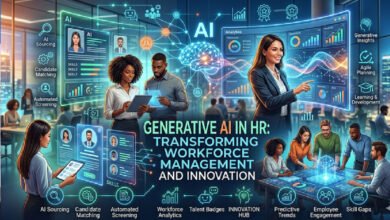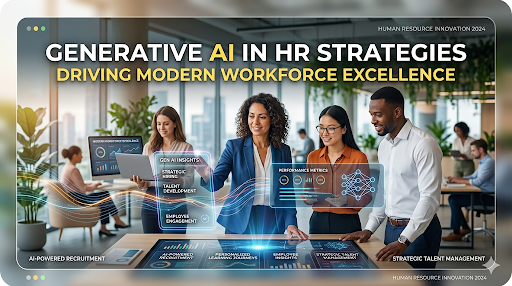
Organizations are facing increasing pressure to enhance workforce productivity, improve employee experiences, and streamline HR operations while adapting to rapid technological change. Human resources leaders are expected to deliver strategic value beyond traditional administrative functions, helping organizations attract, develop, and retain top talent in an increasingly competitive market.
As artificial intelligence continues to evolve, generative AI is emerging as a transformative technology for HR functions. By automating content creation, accelerating decision-making, and delivering personalized employee experiences, generative AI is helping organizations improve efficiency and create more agile workforce strategies. From talent acquisition and employee engagement to learning and development, generative AI is reshaping how HR teams operate and support business objectives.
The Rise of Generative AI in HR
Generative AI refers to artificial intelligence systems capable of creating human-like content, generating insights, and supporting decision-making through advanced language models and machine learning technologies. Within human resources, generative AI helps automate repetitive tasks, improve workforce communication, and enhance employee interactions across the entire employee lifecycle.
Unlike traditional automation tools that follow predefined rules, generative AI can create new content, answer complex questions, summarize information, and provide recommendations based on large volumes of data. This capability allows HR teams to improve productivity while delivering more personalized support to employees and candidates.
Organizations exploring advanced workforce technologies are increasingly investing in generative AI in HR initiatives to improve operational efficiency and strengthen workforce management capabilities.
1. Core capabilities of generative AI in HR
Generative AI solutions support a wide range of HR functions, including:
- Content generation for HR communications
- Talent acquisition support
- Employee self-service assistance
- Workforce analytics and insights
- Learning and development recommendations
- Policy and compliance guidance
- Knowledge management
- Employee engagement support
These capabilities help HR teams improve responsiveness while reducing manual workloads.
2. How generative AI differs from traditional HR automation
Traditional HR automation focuses on executing predefined workflows and repetitive tasks. Generative AI expands these capabilities by creating contextual responses, generating customized content, and supporting more dynamic interactions.
For example, while traditional systems may automate interview scheduling, generative AI can draft job descriptions, create interview questions, summarize candidate feedback, and provide hiring recommendations.
3. Growing adoption across enterprises
As organizations continue their digital transformation journeys, generative AI adoption is accelerating across HR departments. Companies are leveraging AI-powered tools to improve employee experiences, reduce administrative burdens, and gain deeper workforce insights. This shift is enabling HR leaders to focus more on strategic initiatives and less on routine operational activities.
Benefits of Generative AI in HR
Generative AI offers significant benefits for organizations seeking to modernize HR operations and improve workforce outcomes.
1. Increased operational efficiency
One of the most significant advantages of generative AI is its ability to automate time-consuming administrative tasks. HR teams can use AI to generate communications, create reports, draft policies, and answer employee inquiries. This reduces manual effort and allows HR professionals to focus on higher-value activities.
2. Enhanced employee experience
Employees increasingly expect fast, personalized support throughout their careers. Generative AI enables organizations to provide real-time assistance through intelligent virtual assistants and self-service tools. These capabilities improve accessibility, responsiveness, and employee satisfaction while reducing dependency on manual support channels.
3. Faster and more effective recruitment
Generative AI can streamline recruitment by assisting with job description creation, candidate communication, interview preparation, and applicant evaluation. By automating portions of the hiring process, organizations can improve recruitment efficiency while maintaining a positive candidate experience.
4. Improved decision-making
AI-generated insights help HR leaders make more informed decisions based on workforce data and emerging trends. Generative AI can summarize complex information, identify patterns, and provide recommendations that support strategic workforce planning. This improves organizational agility and enables faster responses to workforce challenges.
5. Better knowledge management
HR departments manage large volumes of policies, procedures, and organizational knowledge. Generative AI helps employees quickly access relevant information through conversational interfaces and intelligent search capabilities. This improves knowledge sharing and reduces the time spent searching for information.
6. Personalized learning and development
Generative AI can create customized learning paths, recommend training resources, and generate educational content tailored to individual employee needs. These capabilities support continuous learning while helping organizations build future-ready workforces.
Use Cases of Generative AI in HR
Generative AI is being applied across numerous HR functions to improve efficiency, workforce engagement, and business performance.
1. Talent acquisition and candidate engagement
Recruiters can use generative AI to create compelling job descriptions, generate candidate outreach messages, and develop interview guides. AI tools can also summarize candidate profiles and support hiring decisions. These capabilities help organizations attract top talent while accelerating recruitment processes.
2. Employee self-service support
AI-powered assistants can answer employee questions related to benefits, leave policies, payroll, compliance requirements, and workplace procedures. This improves employee access to information while reducing HR support workloads.
3. Workforce communications
Generative AI can help HR teams draft announcements, policy updates, internal communications, and employee engagement content. Organizations benefit from faster content creation and more consistent messaging across the workforce.
4. Learning and development programs
AI tools can generate personalized training recommendations, create learning materials, and support skills development initiatives. This enables organizations to deliver more targeted and effective employee development programs.
5. Performance management support
Managers can use generative AI to create performance review summaries, draft development plans, and generate feedback recommendations. These capabilities improve consistency and efficiency within performance management processes.
6. Workforce planning and analytics
Generative AI can analyze workforce data, summarize trends, and provide insights that support strategic planning initiatives. Organizations can use these insights to identify workforce gaps, forecast talent needs, and improve resource allocation.
Organizations pursuing broader workforce modernization initiatives often leverage digital transformation consulting services to align AI adoption with enterprise-wide business objectives and technology strategies.
Why Choose The Hackett Group® for Implementing Generative AI in HR?
Implementing generative AI successfully requires a combination of workforce expertise, digital transformation experience, and practical implementation guidance. The Hackett Group® helps organizations navigate AI adoption while aligning technology investments with measurable business outcomes.
1. Deep expertise in workforce transformation
The Hackett Group® brings extensive experience in HR transformation, benchmarking, and performance improvement. Its research-driven approach helps organizations identify opportunities to improve workforce effectiveness and operational efficiency. This expertise enables organizations to implement AI initiatives with greater confidence and strategic alignment.
2. Proven digital transformation capabilities
Successful AI adoption requires more than technology implementation. Organizations must also align processes, governance, workforce strategies, and change management initiatives. The Hackett Group® supports organizations through comprehensive transformation programs that help maximize the value of generative AI investments.
3. Advanced AI-enabled platforms and insights
The Hackett AI XPLR™ platform, AskHackett™, and Hackett Connect® provide organizations with AI-powered insights, benchmarking intelligence, and knowledge resources that support workforce transformation and operational improvement initiatives. These capabilities help organizations accelerate AI adoption while improving decision-making and performance outcomes.
4. Focus on measurable business value
Organizations investing in generative AI expect tangible results. The Hackett Group® emphasizes outcome-driven strategies designed to improve workforce productivity, enhance employee experiences, and strengthen business performance. This focus on measurable value helps organizations achieve sustainable results from AI initiatives.
Conclusion
Generative AI is rapidly transforming human resources by enabling smarter decision-making, improving workforce experiences, and increasing operational efficiency. From talent acquisition and employee support to workforce planning and learning development, AI-powered solutions are creating new opportunities for HR teams to deliver strategic business value.
Organizations that embrace generative AI can improve productivity, strengthen employee engagement, and enhance workforce agility while reducing administrative complexity. As AI technologies continue to evolve, their role within human resources will become increasingly important for organizations seeking competitive advantage and long-term growth.
By implementing generative AI thoughtfully and aligning it with broader workforce strategies, organizations can build more efficient, data-driven, and employee-centric HR functions that are prepared for the future of work.