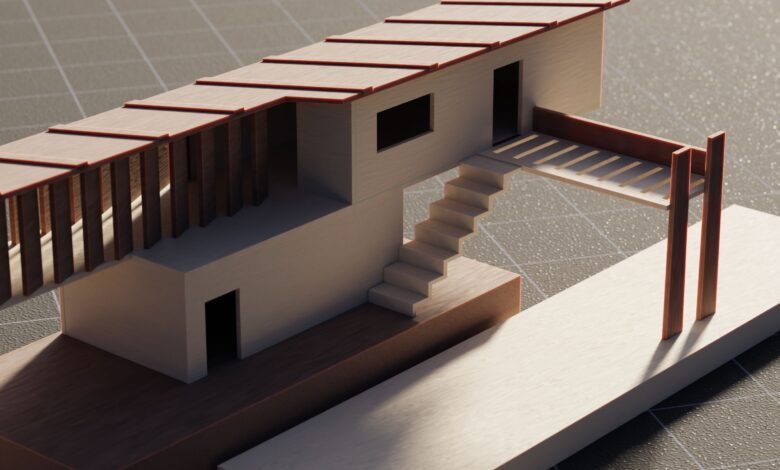
The relationship between the past and the present is nowhere more visible than in the built environment. To the casual observer, modern architecture appears to be a radical, uncompromising break from history. The contemporary landscape is dominated by soaring glass curtain walls, minimalist concrete surfaces, sharp angular geometries, and an absolute rejection of superficial ornamentation. It is easy to view these structures as products of a purely digital, technological era that has completely detached itself from legacy traditions.
However, beneath the sleek surfaces of the world’s most avant-garde buildings lies a profound structural debt to classical history. True innovation rarely happens in a vacuum; instead, it occurs when designers master historical principles and re-engineer them to meet modern demands. From the temples of ancient Greece and Rome to the monumental palaces of the Renaissance, classic architecture provides the foundational DNA that continues to stabilize, organize, and inspire cutting-edge modern design.
1. The Persistence of Classical Symmetry and Proportion
Long before the invention of advanced structural modeling software, ancient architects recognized that human beings possess an innate, biological preference for visual balance. Master builders in antiquity developed sophisticated mathematical systems to ensure that their monuments resonated with harmony.
The most enduring of these frameworks is the Golden Ratio—a geometric proportion found throughout nature that the Greeks applied to the Parthenon to achieve aesthetic perfection. Today’s premier designers continue to rely heavily on this mathematical harmony. Even when creating a deeply minimalist residential villa or a sprawling corporate headquarters, architects utilize these classical ratios to dictate the relationship between a building’s height, width, and window distribution. By anchoring contemporary minimalism within ancient proportions, modern spaces feel structurally stable, visually grounding, and effortlessly serene to the human eye.
2. Reimagining Civic Gathering Spaces and Urban Flow
Classic architecture was fundamentally concerned with the civic experience. Roman master builders were pioneers in urban planning, engineering massive public forums, open-air amphitheaters, and sheltered colonnades known as basilicas. These structures were explicitly designed to facilitate the complex flow of human traffic, encourage democratic assembly, and provide shelter from the elements.
Modern institutional design draws directly from this historic blueprints. The soaring, light-filled central atriums of contemporary university campuses, transit hubs, and corporate tech headquarters are simply direct reinterpretations of the ancient Roman forum. Modern architects mirror this historic approach to urban circulation, utilizing expansive public plazas and continuous structural pathways to foster a deep sense of community, shared transparency, and collaborative energy within dense, high-velocity urban environments.
3. Structural Geometry and Advanced Structural Manipulation
Ancient Rome revolutionized architecture by mastering the physics of the structural arch, the vault, and the dome. These curved geometries allowed historical builders to bridge immense distances and construct vast, unobstructed interior volumes without relying on a dense forest of internal vertical columns.
In the contemporary design landscape, the manipulation of curves has evolved from a functional necessity into an art form. Modern structural engineers use advanced metallurgy and high-strength steel to manipulate traditional shapes into fluid, gravity-defying gestures. This structural evolution is particularly striking in high-end interior and commercial architecture, where monumental central features pay direct homage to classical vaulting. Designers routinely integrate sweeping Custom Rolling Spiral Staircases into luxury atriums to act as dynamic, functional sculptures. By utilizing advanced rolling and bending techniques to curve heavy steel sections into flawless helical profiles, engineers can mimic the sweeping, organic lines of historical stone spiral stairs while achieving a weightless, modern aesthetic. These structural centerpieces connect different levels of a building while drawing the eye upward, celebrating the timeless relationship between geometric mathematical precision and structural fluidity.
4. Honest Materiality and the Mastery of Natural Light
The master builders of antiquity were intensely restricted by geography and material availability. Because they operated without synthetic polymers or composite metals, they relied exclusively on raw, honest materials—such as monolithic marble, rough-hewn limestone, heavy timber, and early forms of volcanic concrete. Furthermore, because artificial lighting did not exist, they engineered precise roof apertures and deep window embrasures to capture, filter, and funnel natural sunlight throughout their interiors.
Modern architecture, particularly the school of structural brutalism and high-end organic modernism, actively mirrors this deep respect for raw materiality and solar alignment. Contemporary architects deliberately leave raw concrete surfaces exposed, celebrate the natural grains of unpolished timber, and use massive sheets of glass to turn natural daylight into an active interior design element. This methodology strip away superficial decorations to let the inherent texture of the materials and the shifting angles of the sun define the psychological ambiance of the space, a direct continuation of classical environmental mastery.
Conclusion
The dialogue between classic architecture and modern design is a testament to the timeless nature of structural excellence. True modernism is not a superficial erasure of the past; it is an intelligent, technological evolution of it. By breathing new life into classical symmetry, reimagining historical civic gathering spaces, manipulating ancient curved geometries, and honoring the relationship between raw materials and natural sunlight, modern designers insulate their work from fleeting trends. Studying the masterpieces of antiquity ensures that as we build the cities of tomorrow, our structures remain anchored to an unshakeable foundation of authentic beauty, structural stability, and lasting human utility.