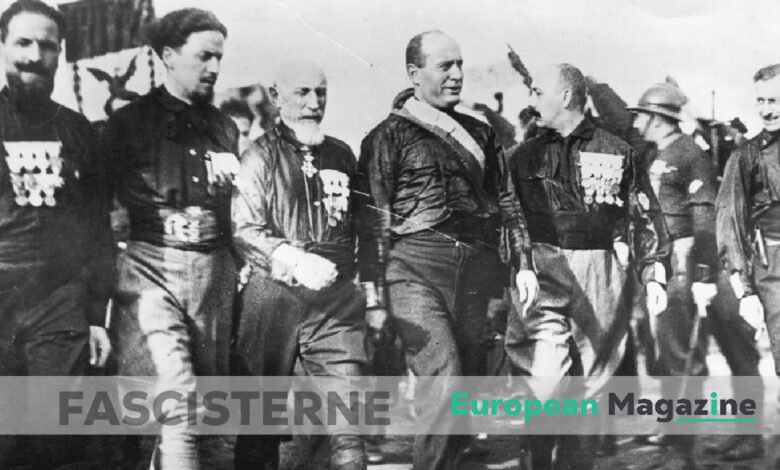
Fascisterne is the Danish word for “the fascists.” It refers to individuals or groups who support fascism, a political ideology known for authoritarian leadership, extreme nationalism, suppression of opposition, and strong control over society. The concept is historically linked to 20th-century Europe, especially regimes in Fascist Italy and Nazi Germany. In simple terms, fascisterne describes followers of fascist ideology and movements.
Introduction
Fascisterne remains a powerful historical and political term that continues to appear in discussions about politics, democracy, and social stability. The word refers to followers of fascist ideology, a system of government that gained prominence in Europe during the early twentieth century. Although fascist regimes largely collapsed after World War II, the ideas and political patterns associated with fascism still attract attention today.
Understanding fascisterne is important because fascism shaped some of the most dramatic and tragic events in modern history. The rise of authoritarian governments in Italy and Germany changed global politics, leading to conflict, human rights abuses, and World War II. These events left lasting lessons about the dangers of extreme nationalism and the concentration of political power.
In modern political discussions, the concept of fascisterne is often used to examine the risks of authoritarian leadership, propaganda, and attacks on democratic institutions. Studying this topic helps people recognize patterns that may threaten freedom and equality.
This article explores the meaning of fascisterne, the origins of fascist ideology, major historical developments, the key beliefs of fascism, and why the topic remains relevant in modern society.
What Does Fascisterne Mean?
The word fascisterne comes from Danish and translates directly into English as “the fascists.” It is commonly used in political and historical discussions to describe individuals who follow or support fascist ideology. Fascism itself is a political system characterized by authoritarian leadership, extreme nationalism, and strict control over political opposition.
Historically, fascisterne referred to members or supporters of fascist political movements that appeared in Europe during the early twentieth century. These movements sought to create powerful centralized states led by strong leaders who claimed to represent the national will.
In political contexts, the term has often been used to describe those who support authoritarian governance or nationalist ideologies that reject democratic systems. In historical discussions, fascisterne typically refers to supporters of fascist governments such as those led by Benito Mussolini in Italy or Adolf Hitler in Germany.
Modern times, the word may also appear in debates about authoritarianism, political extremism, or far-right movements. However, historians and political scientists emphasize that the term should be used carefully because it refers to a specific historical ideology.
The Etymology of the Word Fascisterne
The origin of the term fascisterne can be traced back to the Italian word “fascio,” which means bundle or group. The word symbolized unity and collective strength. In ancient Rome, the symbol known as the “fasces” represented authority and power. The fasces consisted of a bundle of wooden rods tied together around an axe, symbolizing strength through unity and the power of the state.
In the early twentieth century, Italian political leader Benito Mussolini adopted this symbol and the term fascism to describe his political movement. Mussolini believed that the nation should function as a unified collective under strong leadership.
As fascism spread across Europe, the term evolved in different languages. In Danish, the plural form “fascisterne” emerged, meaning “the fascists.” This linguistic development shows how political ideas can shape language and cultural identity.
Over time, the term became closely associated with authoritarian governments and nationalist movements that rejected democratic principles.
The Birth of Fascism in Europe
The rise of fascism in Europe occurred during a period of political and economic instability following World War I. Many countries experienced severe economic problems, including unemployment, inflation, and damaged infrastructure. The war also left millions of people feeling disillusioned with traditional political systems.
Democratic governments struggled to manage these crises. Political debates were often slow and divided, which caused frustration among citizens who wanted quick solutions to economic and social problems.
In this environment of uncertainty, some political leaders promoted authoritarian ideas that promised order, stability, and national revival. Fascist movements presented themselves as strong alternatives to democratic governments, claiming that centralized leadership could restore national pride and economic strength.
Many people supported these movements because they believed strong leadership could solve the problems facing their societies. This environment allowed fascist ideology to gain influence and eventually take control in several European countries.
Mussolini and the Creation of Fascist Italy
Benito Mussolini played a crucial role in the development of fascist ideology. In 1919, he founded the Fasci Italiani di Combattimento, a political movement that later became the Italian Fascist Party. Mussolini promoted a vision of Italy that emphasized national pride, unity, and strong leadership.
In 1922 Mussolini came to power after organizing the March on Rome, a political demonstration that pressured the Italian government to appoint him as prime minister. Once in power, Mussolini gradually dismantled democratic institutions and established a dictatorship.
Mussolini’s ideology emphasized several key ideas. He believed the state should be powerful and that citizens should place national interests above individual freedoms. His government promoted militarism, nationalism, and loyalty to the state.
Through propaganda and strict political control, Mussolini built one of the first fascist regimes in Europe. His leadership became the model for other authoritarian movements across the continent.
The Spread of Fascisterne Ideology Across Europe
After Mussolini established fascism in Italy, similar movements began to appear in other parts of Europe. These movements shared many ideological features, including nationalism, authoritarian leadership, and hostility toward democratic systems.
In Germany, Adolf Hitler developed a political movement known as National Socialism, or Nazism. Although Nazism had unique racial theories, it shared several features with fascism, including centralized power and aggressive nationalism.
Spain experienced a similar authoritarian shift under General Francisco Franco, who ruled after the Spanish Civil War. Portugal also developed a nationalist authoritarian regime under António de Oliveira Salazar.
In Eastern Europe, several countries saw the emergence of nationalist political movements that borrowed elements from fascist ideology. While these movements differed in structure and influence, they reflected the broader spread of fascisterne ideas across the continent.
Fascisterne During World War II
Fascist ideology played a central role in the events that led to World War II. The aggressive expansion policies of Nazi Germany and Fascist Italy destabilized Europe and contributed to global conflict.
Germany under Adolf Hitler pursued territorial expansion and racial policies that resulted in widespread persecution and violence. Italy also participated in military campaigns aligned with fascist objectives.
Together with other allied countries, these governments formed the Axis powers during the war. Their political systems emphasized authoritarian leadership, nationalism, and militarism.
World War II became one of the deadliest conflicts in human history. The war caused enormous destruction, loss of life, and humanitarian crises. The defeat of fascist governments in 1945 marked the end of most fascist regimes in Europe.
Core Ideological Principles of Fascisterne
Fascist ideology is built around several key principles that distinguish it from democratic political systems. One central element is authoritarian leadership. Fascist governments typically concentrate power in the hands of a single leader or ruling party.
Another major principle is extreme nationalism. Fascist movements emphasize loyalty to the nation above all else and often portray the state as the highest authority.
Militarism also plays an important role in fascist ideology. Fascist governments frequently glorify military strength and promote the idea that war can strengthen national unity.
Propaganda is another core feature. Fascist regimes use media and communication tools to influence public opinion and promote loyalty to the state.
Together, these ideas create highly controlled political systems in which individual freedoms are limited and the state exercises extensive influence over society.
The Role of Nationalism in Fascisterne Ideology
Nationalism is one of the most powerful elements within fascist ideology. Fascist movements often promote the belief that the nation is superior and must be protected from perceived threats.
This form of nationalism often includes strong emotional appeals to national identity, culture, and historical pride. Political leaders use these ideas to unify supporters and mobilize public support.
Fascist nationalism often creates a clear distinction between insiders and outsiders. Citizens who belong to the dominant national group are celebrated, while minorities or foreigners may be portrayed as threats to national unity.
By promoting a strong sense of collective identity, fascist leaders were able to gain support and consolidate political power.
Racism and Ethnic Supremacy in Fascist Movements
Racial ideology played a significant role in many fascist regimes, particularly in Nazi Germany. Nazi ideology promoted the belief that certain races were superior and that society should be organized according to racial hierarchy.
These beliefs led to discriminatory laws, persecution, and ultimately genocide during the Holocaust. Millions of Jewish people and other minority groups were targeted and killed.
Racism and ethnic nationalism were often used to justify authoritarian policies and strengthen political control. By identifying specific groups as enemies, fascist governments attempted to unite supporters under a shared ideology.
The tragic consequences of these policies remain one of the most powerful reminders of the dangers of extremist political beliefs.
Propaganda and Media Control Under Fascisterne
Propaganda was one of the most effective tools used by fascist governments. Leaders recognized that controlling information could shape public perception and strengthen loyalty to the state.
Fascist regimes often controlled newspapers, radio broadcasts, and public messaging. Government officials used these channels to promote nationalist narratives and suppress criticism.
In Nazi Germany, propaganda minister Joseph Goebbels developed sophisticated strategies to influence public opinion. These campaigns portrayed the government as strong and successful while attacking political opponents.
By controlling media and communication, fascist governments limited the ability of citizens to access independent information.
Suppression of Freedom and Political Opposition
Fascist governments typically eliminated political opposition to maintain control. Democratic institutions such as independent courts, political parties, and free elections were weakened or abolished.
Opposition groups were often banned, and critics of the government faced surveillance, censorship, or imprisonment. Secret police organizations monitored citizens and suppressed dissent.
These policies dismantled democratic systems and replaced them with authoritarian rule. Citizens were expected to demonstrate loyalty to the state and its leadership.
The suppression of freedom became a defining feature of fascist regimes.
Fascisterne in Denmark and Scandinavian History
Denmark and other Scandinavian countries experienced the influence of fascist ideology during the early twentieth century. While Denmark never developed a full fascist government, the country was occupied by Nazi Germany during World War II.
During this period, some Danish political groups supported fascist ideas, but the majority of the population resisted the occupation. Danish resistance movements played an important role in opposing Nazi rule.
Scandinavian societies responded to the threat of fascism by strengthening democratic institutions and promoting political freedom. These experiences shaped modern Scandinavian political culture.
The Collapse of Fascist Regimes After World War II
The defeat of the Axis powers in 1945 marked the collapse of major fascist governments in Europe. Adolf Hitler’s regime in Germany ended with the fall of Berlin, and Benito Mussolini’s dictatorship in Italy also collapsed.
After the war, international courts held trials to prosecute leaders responsible for war crimes. The Nuremberg Trials became a landmark moment in international law.
The global community also developed new institutions aimed at protecting human rights and preventing future authoritarian regimes. Fascism lost much of its political legitimacy following the war.
Modern-Day Interpretations of Fascisterne
Today, the term fascisterne appears in political discussions, academic research, and public debates about authoritarianism. Scholars study fascist ideology to understand how extremist movements develop and gain influence.
In some cases, the term is used as criticism of political movements that appear authoritarian or nationalist. However, experts emphasize that fascism has specific historical characteristics and should not be used loosely.
Modern discussions about fascisterne often focus on how societies can recognize authoritarian tendencies and protect democratic institutions.
Warning Signs of Modern Fascist Movements
Historians and political scientists often identify several warning signs that may indicate the rise of authoritarian movements.
These signs include attacks on democratic institutions, restrictions on press freedom, and the targeting of minority groups. Strongman leadership that concentrates power in a single individual may also signal potential risks.
Another warning sign is the spread of propaganda and misinformation designed to influence public opinion.
Recognizing these patterns allows societies to respond before authoritarian systems become fully established.
Why Studying Fascisterne Still Matters Today
Studying fascisterne remains important because it helps societies understand how authoritarian ideologies can develop. Historical knowledge provides insight into the political and social conditions that allow extremist movements to gain power.
By examining the history of fascism, people can recognize the importance of democratic institutions, human rights, and political accountability.
Understanding the past also helps prevent similar ideologies from emerging in the future.
The Role of Education in Preventing Fascism
Education plays a key role in protecting societies from extremist ideologies. Teaching history allows younger generations to understand the consequences of authoritarian political systems.
Schools and universities encourage critical thinking and open discussion about political ideas. These skills help individuals evaluate information and resist propaganda.
Education also promotes civic participation and awareness of democratic values, which strengthens society’s ability to resist authoritarian movements.
Fascisterne as a Historical Warning for Future Generations
The history of fascism serves as a powerful reminder of the dangers of intolerance, authoritarianism, and extreme nationalism. The tragedies associated with fascist regimes demonstrate the importance of protecting democratic freedoms.
Remembering this history encourages societies to promote tolerance, respect, and equality. These values help prevent the conditions that allow extremist ideologies to grow.
Future generations can learn from the past and work toward building more inclusive and democratic communities.
Conclusion
Fascisterne represents a historical term with significant political meaning. It refers to followers of fascist ideology, a system built on authoritarian leadership, nationalism, and the suppression of opposition.
The rise of fascist regimes in the twentieth century had profound global consequences, including war, persecution, and the erosion of democratic institutions. These events highlight the dangers of concentrating power in the hands of authoritarian governments.
Studying fascism provides valuable lessons about the importance of democracy, freedom, and human rights. By understanding this history, societies can remain vigilant against extremist ideologies and protect the principles of justice and equality for future generations.
Frequently Asked Questions (FAQs)
1. What does “Fascisterne” mean?
Fascisterne is a Danish word that means “the fascists” in English. It refers to people who support or follow fascist ideology. Fascism is a political system known for strong authoritarian leadership, extreme nationalism, and strict control over society and political opposition.
2. When did Fascisterne first appear in history?
Fascisterne first appeared in Europe in the early 20th century after World War I. The ideology began in Italy under Benito Mussolini in 1919 and later spread to other countries, such as Germany under Adolf Hitler. Economic problems, political instability, and social unrest helped fascist movements gain support during that time.
3. What are the main characteristics of fascist ideology?
Fascist ideology is usually defined by authoritarian leadership, extreme nationalism, militarism, and suppression of opposition. Fascist governments often control media, restrict freedoms, and promote loyalty to the state above individual rights. These systems typically reject democratic principles and concentrate power in a single leader or ruling party.
4. Why is the term Fascisterne still important today?
The term Fascisterne remains important because it reminds people of the dangers of authoritarian rule and extremist political ideologies. Studying fascism helps societies understand how such systems developed in the past and how similar ideas can appear in modern politics. It also encourages awareness about protecting democracy and human rights.
5. How can societies prevent the rise of fascist movements?
Societies can prevent the rise of fascist movements by protecting democratic institutions, promoting education, and encouraging critical thinking. Free media, fair elections, and respect for human rights also help stop authoritarian ideologies from growing. Learning from history allows people to recognize warning signs and defend democratic values.
Read More:
Kinervus Explained: Powerful Physiotherapy and Rehabilitation Guide